
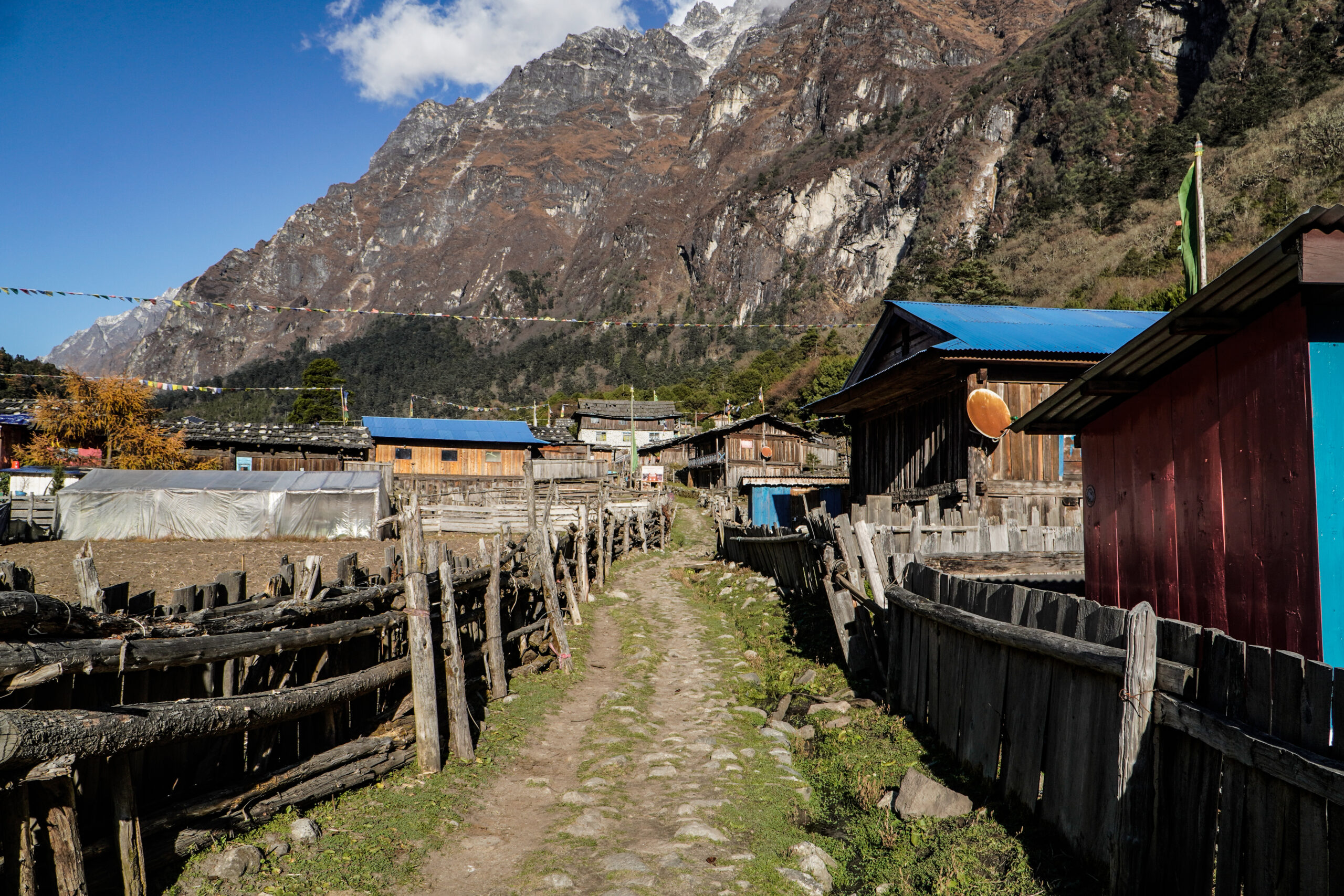
Around Annapurna
Subtropical valleys to Tibetan-influenced high desert, crossing the Thorong La pass at 5,416 m.
What Makes It Special
The Annapurna Circuit Trek is a journey of incredible contrasts. In one trip, you experience almost every landscape Nepal has to offer.
You begin in the green lower valleys, following rivers through forests, terraced hills and traditional villages. As you climb higher, the landscape gradually changes into alpine meadows and rugged mountain terrain. You cross suspension bridges, walk beneath some of the world's highest mountains and experience the distinct cultures of the Manang and Mustang regions.
Then comes Thorong La Pass at 5,416 m the highest point of the journey. On the other side, everything changes again. The landscape becomes dry and dramatic, with Tibetan-style villages, ancient monasteries and the sacred town of Muktinath before the trail descends through the Kali Gandaki Valley.
Green valleys to high mountains. Buddhist villages to sacred pilgrimage sites. Rivers, bridges, forests, glaciers and a 5,416-metre pass. Around Annapurna is a complete Himalayan journey.
Difficulty, Season & Who It's For
Challenging / Strenuous. The most demanding section is the approach to and crossing of Thorong La Pass, where altitude, cold and a long walking day make preparation especially important. An acclimatization day in Manang is an essential part of the itinerary.
March|May and September|November offer the best conditions for this trip.
Fit and active trekkers who can comfortably walk for 5–8
Day-by-Day Itinerary
Day 01Arrive in Kathmandu
Welcome to Nepal! Our team will meet you at the airport and transfer you to your hotel in Kathmandu. After settling in, we'll have a trek briefing where your guide will explain the route, altitude, weather, equipment and preparations for the Annapurna Circuit Trek.
Day 02Kathmandu to Dharapani
We leave Kathmandu early and drive west toward Besisahar before continuing deeper into the Marsyangdi Valley. The journey takes us from the busy Kathmandu Valley into increasingly remote mountain landscapes. From Besisahar, the road becomes rougher as we follow the Marsyangdi River toward Dharapani, the practical starting point for the trekking section of the modern Annapurna Circuit.
Day 03Dharapani to Chame
Today we officially begin walking. The trail follows the Marsyangdi Valley through pine and fir forests, waterfalls and traditional mountain villages. As we gain altitude, the views of Annapurna II and Lamjung Himal begin to open up. We eventually reach Chame, the administrative centre of Manang District and one of the main settlements along the circuit.
Day 04Chame to Upper Pisang
The landscape becomes increasingly dramatic today. We walk through pine forests and narrow mountain valleys beneath huge Himalayan walls before reaching the village of Pisang. We take the upper trail toward Upper Pisang, which provides spectacular views of Annapurna II, Annapurna IV and the surrounding peaks.
Day 05Upper Pisang to Manang
One of the most beautiful days of the trek takes us through the upper Marsyangdi Valley. We follow the scenic route through Ghyaru and Ngawal, traditional villages surrounded by spectacular Himalayan scenery. The landscape becomes drier and more Tibetan-influenced as we approach Manang. By afternoon, we arrive at the lively mountain village of Manang, our base for acclimatization.
Day 06Acclimatization Day in Manang
Today is an important rest and acclimatization day. We take a short acclimatization hike around the Manang Valley, allowing our bodies to adjust to the increasing altitude. Depending on conditions and the group, we can explore the surrounding hills, Gangapurna Lake or other nearby viewpoints. The rest of the day is spent relaxing, exploring Manang and preparing for the higher section of the trek.
Day 07Manang to Yak Kharka
We leave the main Manang Valley and continue higher toward Yak Kharka. The vegetation becomes much thinner as we enter the alpine zone. The walking distance is relatively short, allowing us to gain altitude gradually while enjoying spectacular views of the surrounding peaks.
Day 08Yak Kharka to Thorong Phedi / High Camp
Today we move closer to Thorong La. The landscape is rugged and increasingly barren as we climb above 4,000 metres. Depending on conditions and the group's acclimatization, we stay at Thorong Phedi or Thorong High Camp. We keep the afternoon relaxed and prepare for the biggest day of the trek.
Day 09Cross Thorong La Pass to Muktinath
This is the big one. We start early, climbing steadily toward Thorong La Pass, the highest point of the Annapurna Circuit Trek. The climb is demanding because of the altitude and cold, but reaching the pass is an unforgettable achievement. At 5,416 metres, we are surrounded by enormous Himalayan landscapes before beginning the long descent toward Muktinath. Muktinath is a sacred pilgrimage site for both Hindus and Buddhists and marks the beginning of a dramatic change in the landscape.
Day 10Muktinath to Tatopani
After the high-altitude section of the trek, we descend through the spectacular Kali Gandaki Valley. The landscape changes dramatically as we travel through the dry Mustang region toward the warmer lower valleys. We pass through traditional settlements including Kagbeni and continue south toward Tatopani, famous for its natural hot springs. Depending on road and weather conditions, this section is completed by local transport.
Day 11Tatopani to Pokhara
Our journey continues from the Kali Gandaki Valley toward Pokhara. The landscape gradually becomes greener as we descend into lower elevations. By afternoon, we arrive in Pokhara, where the Annapurna Circuit officially comes to an end. The evening is yours to relax, celebrate the trek and enjoy the lakeside atmosphere.
Day 12Pokhara to Kathmandu
After breakfast, we begin our journey back to Kathmandu. The drive follows the major river valleys and hill roads of central Nepal. Arriving in Kathmandu, we have completed our journey around the Annapurna massif and crossed one of the highest trekking passes in the world.
Day 13Departure
Your Around Annapurna adventure comes to an end. Our team will transfer you to the airport according to your flight schedule. Take home the memories, the mountain stories and hopefully a serious appetite for the next adventure.
What's Included & What's Not
Our package covers everything required for this trip, excluding accommodation and personal expenses in Kathmandu unless otherwise noted.
Included
- Experienced, licensed trekking guide
- Porter service
- Teahouse accommodation throughout the trek
- Full-board meals during the trek
- Breakfast, lunch and dinner
- Tea/coffee with meals where available
- All required trekking permits
- Annapurna Conservation Area fees
- Required trekking documentation and local fees
- Transportation to and from the trekking route
- Local transportation required within the itinerary
- Guide and porter food, accommodation and expenses
- Trek briefing and trip coordination
- Necessary local trekking logistics
- Airport transfer on arrival and departure
- Good vibes and Adventure Monastery energy
Not Included
- Accommodation in Kathmandu or Pokhara
- Personal meals and expenses in Kathmandu or Pokhara
- International or domestic flight tickets
- Travel and rescue insurance
- Personal medical expenses and medication
- Tips for guides and porters
- Bottled water
- Soft drinks, alcohol and other purchased beverages
- Snacks and personal treats
- Personal trekking equipment and clothing
- Hot showers, Wi-Fi, charging and other optional teahouse services
- Anything not specifically mentioned in the itinerary or included section
What to Carry
Pack light and practical - Adventure Monastery provides the technical/expedition equipment; you bring your personal clothing and essentials.
Clothing & Layers
- 2–3 lightweight moisture-wicking T-shirts
- 1–2 long-sleeve trekking shirts
- 1 lightweight fleece / mid-layer
- Good down jacket
- Lightweight waterproof/windproof jacket
- Thermal top and bottom
- 2 pairs proper hiking/trekking pants
- 1 pair warm/down pants
- 3–4 pairs trekking socks
- Warm/winter cap
- Sun cap
- Lightweight gloves
- Warm insulated gloves for Thorong La
- Buff / neck gaiter
Footwear
- Ankle-support trekking boots
- Lightweight sandals/slippers
- Microspikes / traction spikes for icy or snowy conditions
Sun & Weather Protection
- Good UV-protection sunglasses
- Sunscreen SPF 30–50+
- SPF lip balm
- Backpack rain cover
- Lightweight gaiters — optional
Bags & Hydration
- 40–50 L trekking backpack
- Lightweight duffel bag for porter luggage
- Waterproof dry bags / packing cubes
- 2–3 L water capacity
- Water purification tablets/filter
Personal & Emergency
- Headlamp + spare batteries
- Personal first-aid kit
- Blister treatment
- Personal medication
- Quick-dry towel
- Hand sanitizer
- Wet wipes/tissues
- Basic toiletries
Electronics & Documents
- Phone
- Power bank
- Charging cables
- Camera + spare batteries, if needed
- Passport
- Travel insurance details
- Copies/photos of important documents
Recommended Extras
- Trekking poles
- Energy bars / lightweight snacks
- Small dry bags
- Earplugs
- Small personal repair kit
Full packing checklist available on request this is the condensed version for quick reference.
Group Pricing
Priced according to group size, so larger groups share the fixed costs of guides, porters and transportation. All tiers include the full-board package described above.
Other Treks You Might Like
Ready for
Annapurna?
Give us your rough dates and group size, and we'll come back with a plan and pricing for Around Annapurna.
Prefer email? Reach us at hello@adventuremonastery.com